

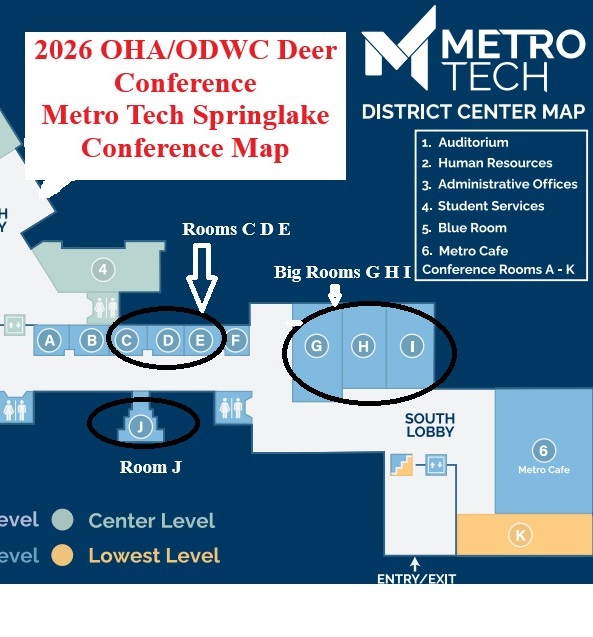
7:30 am to 8:30 am Registration and Check In
8:30 to 9:00 Opening Session
Welcome & Opening Ceremony
Good morning, everyone, and welcome to the 2026 Oklahoma Hunters & Anglers Deer Hunting Conference & Expo! We are grateful that you’ve chosen to spend your day with us as we learn, share knowledge, and celebrate Oklahoma’s rich hunting heritage.
Whether you’re preparing for your very first deer season or you’re a seasoned hunter looking to sharpen your skills, today’s conference has something for everyone. Our goal is to provide practical, ethical, and conservation-minded education that helps you become a safer, more successful hunter while fostering a lifelong appreciation for the outdoors.
Opening Prayer
Presentation of the Flag & Pledge of Allegiance ODWC Honor Guard
“I pledge allegiance to the Flag of the United States of America, and to the Republic for which it stands, one Nation under God, indivisible, with liberty and justice for all.”
Today’s Schedule
Here’s what you can expect throughout the day:
- Over 35 educational sessions presented by experienced hunters, wildlife professionals, and industry experts.
- Topics ranging from Deer Hunting 101 and whitetail biology to advanced hunting tactics, archery, trail cameras, first aid, meat care, and more.
- Opportunities to visit with exhibitors and partners.
- Time to meet our speakers, ask questions, and network with fellow hunters from across Oklahoma.
- A catered lunch included with your registration.
- Closing remarks and the prize drawings this afternoon. (You must be present to win unless otherwise announced.)
We encourage you to attend as many sessions as possible, ask questions, and make the most of today’s learning opportunities.
On behalf of the Oklahoma Hunters & Anglers Board of Directors, our volunteers, sponsors, exhibitors, and presenters, thank you for being here. We hope you leave today with new knowledge, new friendships, and an even greater appreciation for Oklahoma’s hunting heritage.
- Have a great conference, and good luck this coming deer season!
9:15 to 10:15 Sessions
Deer Hunting Q&A with Jeff Danker – Big Room G
Join renowned whitetail expert Jeff Danker, host of BuckVentures TV, for an open and interactive question-and-answer session. With decades of experience pursuing whitetails across the country, Jeff brings practical knowledge, proven tactics, and real-world insight that hunters of every experience level can benefit from.
Whether you’re preparing for your very first deer season or looking to fine-tune advanced hunting strategies, this is your opportunity to ask the questions that matter most. Topics may include stand placement, scouting, rut behavior, calling, scent control, equipment, shot placement, recovery, public and private land tactics, and much more.
No topic is off-limits, and no question is too simple or too advanced. Jeff’s approachable teaching style and wealth of experience make this one of the conference’s most engaging and informative sessions.
Bring your questions, learn from one of the nation’s most respected whitetail hunters, and leave with practical tips you can apply this season.
Deer Hunting 101 – Getting Started: So You Want to Go Deer Hunting…Now What? with Chris Howell – Big Room H
Whether your goal is to harvest your first deer, spend more time outdoors, or create lasting memories with family and friends, getting started can seem overwhelming. The good news is that deer hunting isn’t nearly as complicated as it may seem. By learning a few fundamentals and taking the right first steps, you’ll be well on your way to becoming a safe, ethical, and successful hunter.
This session will guide new and aspiring hunters through the process of getting started—from hunter education and licensing to choosing a firearm or bow, selecting essential gear, scouting hunting locations, and preparing for opening day. You’ll also learn what equipment is truly necessary and what can wait, helping you avoid the common misconception that success requires thousands of dollars in the latest gear. We’ll separate the essentials from the heavily marketed “nice-to-have” items, allowing you to spend your money wisely.
Most importantly, you’ll discover that experience is the greatest teacher. Don’t wait until you think you know everything before heading into the woods. Learn the basics, hunt safely, ask questions, and spend time outdoors. Every hunt offers valuable lessons, whether you harvest a deer or simply enjoy the experience.
The most successful deer hunters aren’t those with the most expensive equipment—they’re the ones who continue learning, adapting, and enjoying every season in the field.
Field Care of Meat, Skinning, etc. – Steve Abbott – Big Room I
Once you have harvested your game, the real work begins. Proper field care is critical to preserving the quality of your meat and ensuring your trophy is handled correctly. In this session, you will learn from an experienced meat processor and taxidermist the essential steps for caring for your harvest in the field, including cooling, handling, and transporting your deer.
You will also learn how to properly cape a deer if you plan to have it mounted, including key steps to protect the hide and ensure your taxidermist has the best possible product to work with. Whether this is your first harvest or you are looking to improve your post-hunt skills, this session will provide valuable knowledge to help you make the most of your success in the field.
Scouting and Stand Placement 101 with Kreg Griffith – Room D
Kreg will focus on the foundational turths behind consistently successful stand selection. This session will cover the key factors every hunter should consider when choosing the right location, including food-to-bed and bed-to-food movement patterns, access routes, and wind direction.
Attendees will learn how to identify and capitalize on pinch points, funnels, edge habitat, and the many variations that can influence deer movement. Kreg will also discuss how timing impacts stand selection, including differences between hunting feeding patterns, the rut, and seasonal transitions.
This session will also explore the use of digital scouting tools to help hunters identify potential stand locations before ever stepping foot in the woods. Whether you are preparing for opening day or adjusting during the season, these foundational truths will help you make smarter decisions and increase your odds of success.
Stop the Bleed with Dylan Langford & Jake Rowland – Room C
Hunting is generally a safe and enjoyable activity, but accidents can and do happen.
Uncontrolled bleeding is one of the leading causes of preventable death. In fact, nearly 40% of trauma-related deaths worldwide are due to severe bleeding or its complications, making hemorrhage the most common preventable cause of death in trauma situations.
This introductory Stop the Bleed session is designed to encourage hunters to become trained, equipped, and empowered to respond effectively in a bleeding emergency before professional help arrives. Participants will learn practical, life-saving techniques to control bleeding and help prevent loss of life in the event of an accidental injury.
Shot Placement with Kelly Boyer – Room E
A successful hunt doesn’t end with the shot—it ends with the ethical recovery of your deer. In this session, you’ll learn the fundamentals of proper shot placement, post-shot decision-making, and effective tracking techniques that lead to more successful recoveries.
We’ll cover whitetail anatomy, ideal shot placement, and how shot angle affects penetration and recovery. You’ll also learn what to do immediately after the shot, including how long to wait before tracking, how to read blood and other sign, and how to avoid the common mistakes that can result in pushing a wounded deer.
Drawing on years of experience and hundreds of tracking and recovery situations, Kelly Boyer will share practical, real-world strategies for recovering game in a variety of hunting scenarios. Whether you’re a first-time hunter or have years of experience, you’ll leave with the knowledge and confidence to make better decisions from the moment you squeeze the trigger until your deer is successfully recovered.
Finding a Place to Hunt with Joshua Luft – Room C
Finding quality hunting opportunities is one of the biggest challenges facing both new and experienced hunters. In this informative session, Joshua Luft will explore the many options available to help you find safe, legal, and productive places to hunt in Oklahoma.
Topics will include an overview of Oklahoma Department of Wildlife Conservation (ODWC) Wildlife Management Areas (WMAs), the Oklahoma Land Access Program (OLAP), U.S. Forest Service hunting opportunities, and important considerations when seeking permission to hunt private property. Joshua will also discuss hunt clubs, private leases, guided day hunts, and other resources that can expand your hunting opportunities. Whether you’re looking for your first hunting spot or hoping to add new locations to your list, this session will provide practical information and valuable resources to help you get started.
10:30 to 11:30 Sessions
Thinking Like a Deer with Jeff Danker – Big Room G
Join BuckVentures TV host Jeff Danker as he shares how successful hunters learn to see the woods through the eyes of a whitetail deer. This session explores deer behavior, how to interpret deer sign, and the factors that influence where and when deer move. Jeff will also discuss how seasonal changes, weather, hunting pressure, and timing can impact deer activity, helping hunters make smarter decisions about when to be in the field. Whether you’re new to deer hunting or looking to improve your success, this session will provide practical insights you can apply on your very next hunt.
Whitetail Deer Biology 101: Understanding the Deer Behind the Hunt with Dallas Barber – Big Room H
A successful whitetail hunting strategy begins with understanding the animal you are pursuing. In this session, Dallas Barber will provide a high-level overview of whitetail deer biology, including life cycle, behavior, habitat needs, and seasonal changes. Attendees will learn how understanding deer biology can help them make better decisions in the field, from scouting and stand placement to timing hunts and interpreting deer movement.
Whether you are a new hunter looking to build a strong foundation or an experienced hunter wanting to better understand the “why” behind deer behavior, this session will provide valuable insight to help improve your hunting success.
Field Care of Meat, Skinning etc. with Steve Abbott – Big Room I
Once you have harvested your game, the real work begins. Proper field care is critical to preserving the quality of your meat and ensuring your trophy is handled correctly. In this session, you will learn from an experienced meat processor and taxidermist the essential steps for caring for your harvest in the field, including cooling, handling, and transporting your deer.
You will also learn how to properly cape a deer if you plan to have it mounted, including key steps to protect the hide and ensure your taxidermist has the best possible product to work with. Whether this is your first harvest or you are looking to improve your post-hunt skills, this session will provide valuable knowledge to help you make the most of your success in the field.
Ladies Only Session with Lisa White & Alyssa Bowen – Room D
Sorry gentlemen — this session is for ladies only!
Women are one of the fastest-growing groups embracing our hunting and fishing heritage, and Lisa White and Alyssa Bowen bring a unique and inspiring perspective to the outdoor experience. This interactive session gives women hunters and outdoor enthusiasts a comfortable place to ask questions, share experiences, and learn from two of Oklahoma’s most recognized outdoorswomen.
Whether you are brand new to deer hunting or have years of experience in the field, no question is too simple or too complex. Lisa and Alyssa will provide honest, respectful, and practical insight designed to help attendees become more confident and successful hunters.
Five things a hunter can do to increase their odds with Chris Howell – Room J
Success in deer hunting is often determined by small decisions made before and during the hunt. This session will focus on five practical strategies hunters can immediately apply to improve their chances of encountering and harvesting deer.
From understanding deer movement to making smarter decisions in the field, attendees will learn how to focus on the factors that consistently put more deer within range. Topics will include why hunting the wind is more important than simply choosing a favorite stand location, how to maximize opportunities by timing sits effectively, and why targeting transition areas can dramatically increase encounters.
Hunters will also learn the importance of controlling entry and exit routes, reducing pressure on the property, and using deer behavior and observations to guide future hunting decisions. Whether hunting public land, a small acreage, or a managed property, these five concepts can help hunters become more efficient, strategic, and successful in the field.
Key Takeaways:
- Hunt the Wind, Not the Spot – Learn why scent control starts with stand placement and how wind direction should dictate where and when you hunt.
- Time Your Sits, Don’t Overhunt – Understand when to be in the woods and how overpressuring a location can reduce your chances.
- Hunt Transitions – Discover why edges, habitat changes, and travel corridors are key areas for finding deer movement.
- Control Entry and Exit Like It Matters – Learn how access routes and minimizing disturbance can make or break a hunt.
- Let Deer Tell You What to Do – Use trail cameras, observations, and deer behavior to adjust strategies instead of forcing a plan.
This session would be a great fit for hunters of all experience levels because it focuses on practical adjustments that can immediately improve hunting success.
Hunter First Aid with Bobby Armstrong – Room A
Even the most experienced and prepared hunters can face unexpected challenges in the field. Rough terrain, sharp equipment, weather conditions, and remote locations can turn a simple mistake into a serious situation. One misstep, one slip of a knife, or one unexpected injury can quickly create an emergency where basic first aid knowledge becomes critical.
In this session, you will learn essential first aid skills every hunter should know before heading into the field. Topics will include recognizing and treating common hunting-related injuries, managing cuts and bleeding, responding to sprains and falls, handling emergencies in remote locations, and knowing when to seek additional medical help.
Whether you hunt close to home or miles from the nearest road, being prepared can make the difference when an accident happens. Learn how to stay calm, respond effectively, and be ready when the unexpected occurs.
Scent Control with Chris Hammond – Room E
Scent control is one of the most misunderstood and overlooked aspects of deer hunting. In this session, hunters will learn how deer use their incredible sense of smell, common scent-control mistakes, and practical strategies to reduce human odor in the field. From preparation before the hunt to staying undetected in the stand, this session will provide proven tips to help hunters improve their chances of getting within range of a mature whitetail.
Lunch Session 11:45 to 1:15 Big Rooms G H I
Please gather in Big Rooms GHI for Pre Meal Prayer Before Lunch
OHA Announces $10,000 Fall Donation to ODWC
The Oklahoma Hunters & Anglers (OHA) is pleased to announce that our 2026 Fall Donation to the Oklahoma Department of Wildlife Conservation (ODWC) will be $10,000.
Transparency has been a core value of the OHA since day one. We believe our members, donors, and partners should have a voice in how their contributions are used to benefit Oklahoma’s wildlife, conservation efforts, and outdoor heritage.
To ensure your voices are heard, the OHA reached out to ODWC leadership and asked what projects they felt would have the greatest impact. ODWC provided three funding requests:
- Mossberg Five-Gun Training Set for Hunter Education Classes
Providing hands-on training tools to help prepare the next generation of safe and responsible hunters. - Funding for the Hunters Against Hunger Program
Supporting a program that helps provide nutritious wild game protein to families in need across Oklahoma. - Metal Detectors for Wildlife Conservation Wardens
Equipping District 5 Game Wardens with tools to assist investigations, including locating bullets in harvested animals and recovering shell casings related to wildlife violations.
While the OHA did not have sufficient available funding to fully support all three requests, the OHA Board of Directors developed three funding options and is asking our members, donors, and partners to vote and help determine which projects will receive support.
During the lunch session at the conference, attendees will hear directly from ODWC representatives about each project:
- Marcus Thibodeau, ODWC Biologist, will explain the importance of the Mossberg Five-Gun Training Set for Hunter Education programs.
- Nels Rodefeld, ODWC Assistant Director, will discuss the needs and impact of the Hunters Against Hunger Program.
- Jacob Harrett, will share how District 5 Game Wardens will utilize metal detectors during wildlife investigations.
From the beginning, the OHA’s motto has been:
Raised Here – Stays Here
Every dollar raised by the OHA is invested back into Oklahoma. As a volunteer-driven organization with no paid staff, 100% of your donations directly support the OHA mission of recruiting, retaining, and reactivating hunters and anglers while promoting conservation and outdoor education across our state.
Thank you to our members, donors, and partners for making these conservation efforts possible.
1:30 to 2:30 Sessions
Thinking Like a Deer with Jeff Danker – Big Room G
Join BuckVentures TV host Jeff Danker as he shares how successful hunters learn to see the woods through the eyes of a whitetail deer. This session explores deer behavior, how to interpret deer sign, and the factors that influence where and when deer move. Jeff will also discuss how seasonal changes, weather, hunting pressure, and timing can impact deer activity, helping hunters make smarter decisions about when to be in the field. Whether you’re new to deer hunting or looking to improve your success, this session will provide practical insights you can apply on your very next hunt.
Deer Biology 102 with Dallas Barber – Big Room H
Ready to take your understanding of whitetail deer to the next level? Building on the foundation established in Deer Biology 101, Dallas Barber takes a deeper dive into the science and behavior of whitetail deer and explains how advanced biological knowledge can help hunters make better decisions in the field.
This session explores the seasonal changes that influence deer movement, communication, breeding activity, nutrition, habitat use, and survival. You’ll gain a better understanding of why deer behave the way they do throughout the year and how environmental conditions, hunting pressure, and natural instincts affect their daily routines.
By learning to recognize and interpret these biological patterns, hunters can improve scouting, stand placement, timing, and overall hunting strategy. Whether you’re looking to become more consistent or simply want a greater appreciation for North America’s most popular big game animal, this session will provide practical, science-based insights you can immediately apply in the woods.
In this session, you will learn:
- How seasonal biology influences deer movement and behavior.
- The effects of nutrition, habitat, and weather on whitetail activity.
- How breeding behavior changes throughout the rut.
- Why hunting pressure alters deer patterns and how mature bucks adapt.
- How to use advanced biological knowledge to improve scouting and hunting success.
Deer Hunting Safety and Hunting Regulations with Jacob Harriet & Jake Rowland – Big Room I
The Oklahoma Department of Wildlife Conservation (ODWC) hunting regulations can sometimes seem complicated, but every hunter shares the same goal—to hunt legally, ethically, and safely. In this informative session, ODWC Game Warden Jacob Harriet will explain the rules and regulations that apply to Oklahoma deer hunters, helping attendees understand not only the letter of the law, but also the intent behind it.
Topics will include deer hunting safety, licensing requirements, legal methods of take, transportation and tagging requirements, and common regulation questions that every hunter should know. Participants will also receive a hands-on overview of the Go Outdoors Oklahoma app, including how to purchase licenses, access regulations, electronically check harvested game, and use other helpful features. The session will also cover Operation Game Thief, explaining how hunters can anonymously report wildlife violations and help protect Oklahoma’s hunting heritage. The Go Outdoors Oklahoma app provides mobile licenses, regulations, harvest reporting, maps, and additional tools for hunters.
Whether you’re a first-time hunter or a seasoned outdoorsman, this session will help you hunt with confidence by ensuring you understand Oklahoma’s hunting laws and avoid common mistakes in the field.
Introduction to Bow Hunting with Bryn Chapman – Room D
Your first bow hunt can be a rewarding and memorable experience when you take the time to choose the right equipment, develop your shooting skills, and prepare for the challenges of hunting at close range. Bowhunting offers a unique connection to the outdoors and provides an exciting challenge for both new and experienced hunters.
Unlike rifle hunting, bowhunting requires hunters to get much closer to deer before taking a shot. Success depends on patience, careful planning, stealth, and consistent practice. Ethical bowhunters understand the importance of accuracy and only take shots they have practiced extensively and can make confidently.
Many hunters are drawn to bowhunting because of the challenge and the intimate encounters with wildlife that only archery can provide. Becoming proficient with a bow takes dedication and regular practice, but the reward of a successful, ethical harvest makes the effort worthwhile.
In this session, you’ll receive an introduction to the fundamentals of deer bowhunting, including:
- Choosing the right bow for your needs (compound, crossbow, recurve, and longbow)
- Proper bow setup and tuning
- Selecting arrows, broadheads, and other essential equipment
- Developing safe and effective shooting techniques
- Practicing for accuracy and consistency
- Understanding shot placement and ethical shot selection
- Stand and blind setup for bow shots
- Scent control and minimizing detection
- Reading deer behavior and positioning for close-range opportunities
- Essential gear for a successful hunt
- Common mistakes new bowhunters should avoid
Whether you’re considering picking up a bow for the first time or looking to build a solid foundation before your first season, this session will provide practical knowledge and proven techniques to help you become a safe, confident, and ethical bowhunter. You’ll leave with a better understanding of the equipment, skills, and preparation necessary to increase your chances of success while respecting the wildlife and traditions of archery hunting.
Using Trail Cameras to Improve Deer Hunting Success with Chancy Holdsworth and Cole Cannon – Room J
Trail cameras have transformed modern deer hunting by giving hunters a window into the daily lives of whitetails without disturbing them. When used correctly, they provide valuable information about deer movement, herd health, and seasonal behavior that can help hunters make more informed decisions throughout the season.
In this session, Chancy and Cole from BuckVentures will share practical strategies for getting the most out of your trail cameras. Topics will include proper camera setup and placement, selecting high-percentage locations, and relocating cameras as food sources, weather, and deer movement patterns change throughout the year.
Attendees will also learn how to use trail cameras to study deer behavior, identify and monitor individual bucks, recognize travel patterns, and determine when and where deer are most active. The instructors will explain how to organize and analyze the photos and videos you collect so you can make better hunting decisions while minimizing pressure on the deer you are pursuing.
Whether you’re new to trail cameras or looking to refine your scouting strategy, this session will provide practical, field-tested techniques that can help increase your confidence and effectiveness during deer season.
The session will conclude with an interactive Q&A, giving attendees the opportunity to ask specific questions about trail camera selection, placement, settings, and hunting strategies.
Habitat Improvement with Leah Lowe – Room C
Proper land management is the foundation for creating and maintaining quality wildlife habitat. Whether your goal is to improve deer numbers, increase biodiversity, or enhance overall property health, understanding the right management practices is essential.
Where do you begin? Should you focus on timber thinning, prescribed burning, native plant establishment, or invasive species removal? Are you encouraging native forbs and beneficial vegetation to thrive? How can you move beyond relying solely on food plots and create a landscape that naturally provides the food, cover, and water wildlife needs throughout the year?
In this session, you’ll learn practical habitat management strategies that can help transform your property into a healthier, more productive environment for deer and other wildlife. Discover how to evaluate your land, identify opportunities for improvement, and implement proven practices to meet your wildlife management goals.
Caliber & Ammo Selection and Bullet Ballistics with Rick Nolan – Room E
Choosing the right rifle caliber and ammunition for deer hunting can be one of the most confusing decisions hunters face. With countless caliber and bullet options available, understanding what really matters can help you make ethical, accurate, and confident shots in the field.
In this informative session, Rick Nolan will break down the fundamentals of rifle caliber and ammunition selection. Participants will learn the key factors to consider when matching a rifle and ammunition to their hunting style.
Rick will also discuss the importance of rifle accuracy, understanding and managing recoil, bullet trajectory, and the basic principles of ballistics that every deer hunter should know. The session concludes with practical guidance on proper shot placement to ensure quick, ethical harvests.
Whether you’re purchasing your first deer rifle or looking to better understand the capabilities of your current setup, you’ll leave with practical knowledge you can immediately apply in the field.
2:45 to 3:45 Sessions
Field to Fork with Jim Reynolds – Big Room G
The hunt doesn’t end when the deer hits the ground—the journey from field to fork is just beginning. Properly processing a deer starts immediately after harvest and is an essential skill that connects the hunter to the food they provide.
For generations, hunters have relied on simple, effective methods to transform wild game into quality table fare. Field dressing, skinning, quartering, and preparing meat for cooking or storage are time-tested practices, yet deer processing is often surrounded by myths, misconceptions, and unnecessary intimidation.
This session will help remove the uncertainty and build confidence in processing your own harvest. Participants will learn about the basic equipment needed, proper field-to-table techniques, and the fundamentals of breaking down a deer for consumption.
Whether you are a first-time hunter or looking to improve your skills, this session will demonstrate that processing your own deer can be a straightforward, rewarding part of the hunting experience. The journey from field to fork is where the true connection to conservation, hunting, and providing your own food comes full circle.
Deer Biology 101 with Dallas Barber – Big Room H
A successful whitetail hunting strategy begins with understanding the animal you are pursuing. In this session, Dallas Barber will provide a high-level overview of whitetail deer biology, including life cycle, behavior, habitat needs, and seasonal changes. Attendees will learn how understanding deer biology can help them make better decisions in the field, from scouting and stand placement to timing hunts and interpreting deer movement.
Whether you are a new hunter looking to build a strong foundation or an experienced hunter wanting to better understand the “why” behind deer behavior, this session will provide valuable insight to help improve your hunting success.
Saddle Hunting with Jacob Harriet and Jake Rowland – Big Room I
In this session, attendees will be introduced to the fundamentals of saddle hunting and learn why this versatile hunting method continues to grow in popularity. Jacob and Jake will cover the different types of saddles, climbing methods, essential gear considerations, and the critical safety practices every saddle hunter should understand.
The session will also explore what to consider before, during, and after the hunt, including setup, mobility, comfort, and preparation in the field. Attendees will have the opportunity to see various saddle systems and climbing methods through hands-on visual demonstrations.
Whether you are a hunter curious about trying saddle hunting for the first time or an experienced hunter looking to expand your options, this session will provide the knowledge and confidence needed to determine if saddle hunting is the right fit for your upcoming season.
Intermediate Bow Hunting with Bryn Chapman – Room D
Taking your bow hunting skills to the next level requires more than just shooting your bow. In this session, Bryn Chapman will help hunters prepare for the challenges they face in the field by focusing on practical skills, preparation, and decision-making. Topics will include safe and effective ways to practice at home, finding nearby places to sharpen your skills, selecting additional gear, shot placement for a variety of hunting scenarios, in-field strategies, and much more. Whether you are looking to improve your confidence or become a more consistent bow hunter, this session will provide valuable knowledge to help you succeed this season.
Self – Videoing Your Hunts Chancy Holdsworth and Cole Cannon – Room J
Hunting is challenging on its own, but adding a camera to the equation creates a whole new level of difficulty. Successfully filming a hunt requires preparation, patience, and the ability to balance being a hunter and a storyteller at the same time.
Whether your goal is to simply preserve memories to share with friends and family or you hope to create engaging hunting content for a larger audience, understanding the fundamentals of self-filming can make all the difference.
In this session, Chancy and Cole will cover the basics of filming your own hunts, including camera setup, equipment selection, essential accessories, telling the story of the hunt, capturing the “hero shot,” utilizing B-roll footage, editing techniques, managing your footage, and much more. Attendees will learn practical tips to improve their filming skills and create better hunting memories both in the field and after the hunt is over.
Conservation and Deer Management: Building a Better Herd with Jerry Shaw – Room C
Successful deer management is about much more than growing bigger bucks. It is about maintaining a healthy deer herd while ensuring the habitat can support it for years to come.
In this session, you’ll learn the principles of sound deer management, including how to determine the appropriate buck-to-doe ratio for your property, why harvesting does is often essential to maintaining a balanced herd, and how food availability, habitat quality, and deer density all work together to influence herd health.
You’ll discover how to establish realistic management goals based on your property’s size, habitat, and geographic location. Whether your objective is to increase your deer population, reduce herd numbers to match available resources, or improve age structure and hunting opportunities, you’ll gain practical strategies to help maximize your property’s potential.
The session will also cover habitat improvements, population monitoring, and the public and private resources available to help landowners and hunters make informed management decisions. By the end of this presentation, you’ll have the knowledge needed to develop a science-based management plan that benefits both the deer herd and the habitat it depends on.
Understanding the Oklahoma Controlled Hunt Program Room w Brian Moorehead – Room E
The Oklahoma Department of Wildlife Conservation (ODWC) Controlled Hunt Program provides hunters with a unique opportunity to enjoy high-quality, low-pressure hunting experiences on some of Oklahoma’s premier public lands. Through a randomized drawing system, hunters have the chance to pursue species such as elk, white-tailed deer, pronghorn, and spring turkey on carefully managed wildlife areas where general public hunting is limited or not permitted.
Controlled hunts play an important role in wildlife management by maintaining healthy game populations, preventing overharvest, and providing safe, well-managed hunting opportunities.
This session will walk participants through every step of the application process, including how to improve their odds of being selected. Topics will include where to find current controlled hunt information, application opening and closing dates, licensing and application fees, hunt categories, and how Oklahoma’s preference point system works. Whether you’re applying for the first time or looking to maximize your chances in future drawings, this session will provide the knowledge and strategies needed to confidently navigate the ODWC Controlled Hunt Program.
4:00 to 5:00 Sessions
Field to Fork with Jim Reynolds – Big Room G
The hunt doesn’t end when the deer hits the ground—the journey from field to fork is just beginning. Properly processing a deer starts immediately after harvest and is an essential skill that connects the hunter to the food they provide.
For generations, hunters have relied on simple, effective methods to transform wild game into quality table fare. Field dressing, skinning, quartering, and preparing meat for cooking or storage are time-tested practices, yet deer processing is often surrounded by myths, misconceptions, and unnecessary intimidation.
This session will help remove the uncertainty and build confidence in processing your own harvest. Participants will learn about the basic equipment needed, proper field-to-table techniques, and the fundamentals of breaking down a deer for consumption.
Whether you are a first-time hunter or looking to improve your skills, this session will demonstrate that processing your own deer can be a straightforward, rewarding part of the hunting experience. The journey from field to fork is where the true connection to conservation, hunting, and providing your own food comes full circle.
Deer Biology 102 with Dallas Barber – Big Room H
Ready to take your understanding of whitetail deer to the next level? Building on the foundation established in Deer Biology 101, Dallas Barber takes a deeper dive into the science and behavior of whitetail deer and explains how advanced biological knowledge can help hunters make better decisions in the field.
This session explores the seasonal changes that influence deer movement, communication, breeding activity, nutrition, habitat use, and survival. You’ll gain a better understanding of why deer behave the way they do throughout the year and how environmental conditions, hunting pressure, and natural instincts affect their daily routines.
By learning to recognize and interpret these biological patterns, hunters can improve scouting, stand placement, timing, and overall hunting strategy. Whether you’re looking to become more consistent or simply want a greater appreciation for North America’s most popular big game animal, this session will provide practical, science-based insights you can immediately apply in the woods.
In this session, you will learn:
- How seasonal biology influences deer movement and behavior.
- The effects of nutrition, habitat, and weather on whitetail activity.
- How breeding behavior changes throughout the rut.
- Why hunting pressure alters deer patterns and how mature bucks adapt.
- How to use advanced biological knowledge to improve scouting and hunting success.
Tracking after the shot Bobby Armstrong, Rhett Acker & McKayla Hunt – Big Room I
What you do immediately after the shot can be the difference between a successful recovery and the heartbreak of losing game. Knowing when to track, when to wait, and when to call in additional resources is a critical skill every hunter should understand.
In this session, three experienced subject matter experts will share lessons learned from countless recoveries and hundreds of tracking situations. Attendees will gain practical knowledge to improve their recovery success while learning how traditional tracking methods, tracking dogs, and drone technology can work together.
This session will help bridge the gap between self-tracking, dog tracking, and drone-assisted recovery.
- Bobby Armstrong will share tips, strategies, and best practices for tracking game on your own, including what to look for and common mistakes to avoid.
- Mckayla or Craig will discuss when and why hunters should consider calling in a trained tracking dog and how dog tracking can improve recovery success.
- Rhett will cover the advantages, limitations, and considerations of using drones for game recovery.
Whether you are a first-time hunter or a seasoned veteran, this session will provide valuable insight to help you make better decisions after the shot and increase your chances of recovering your animal.
Advanced Bow Tuning with Bryn Chapman – Room D
The foundation of successful bowhunting begins with one simple principle: a properly set up, precisely tuned, and accurately sighted-in bow. While this may seem obvious, many bowhunters head into the season without taking the time to ensure their equipment is performing at its best.
In this advanced session, Bryn Chapman will share lessons learned from a lifetime of tuning and shooting compound bows as both a dedicated bowhunter and competitive target archer. While a single session cannot cover every detail of bow setup and tuning, Bryn will provide a high-level overview of the critical areas that can impact accuracy, consistency, and confidence in the field.
Attendees will learn what to look for when evaluating bow performance, common tuning considerations, and where to begin when taking their shooting to the next level. Whether you are preparing for hunting season or striving to improve your overall shooting performance, this session will provide valuable insight to help you get the most out of your equipment.
Mastering Whitetail Tactics Throughout the Season with Jeff Danker – Room J
Consistently harvesting mature whitetails requires adapting your strategy as deer behavior changes throughout the hunting season. The tactics that work on an opening-day pattern often become ineffective once the pre-rut begins, and strategies that shine during the rut may have little value during the late season. Understanding these seasonal shifts is one of the keys to becoming a more successful deer hunter.
In this session, you’ll learn how to adjust your hunting approach during the early season, pre-rut, rut, post-rut, and late season. Topics will include identifying changing food sources, bedding and travel patterns, stand placement, hunting pressure, and how weather influences deer movement. You’ll also discover when and how to effectively use deer vocalizations, rattling, scents, and decoys, along with common mistakes that can reduce their effectiveness.
Whether you’re hunting public land or managing a private property, this session will provide practical, field-tested strategies that will help you recognize seasonal deer behavior and choose the right tactics at the right time to increase your chances of success.
Reloading 101 with Earl Reed – Room C
Is reloading right for you? Does handloading actually save money, improve accuracy, or both? How accurate does a hunting rifle really need to be? What equipment, knowledge, and time are required to get started?
In this session, you’ll learn the basics of metallic cartridge reloading, including the benefits and challenges of reloading your own ammunition, essential tools and components, safety considerations, and how handloading can help hunters better understand their rifles and ammunition. Whether you are curious about getting started or simply want to learn more about the process, this session will answer your questions and help you determine if reloading is the right fit for you.
Pros and cons of feeding with Jerry Shaw – Room E
Supplemental deer feeding is one of the most debated topics in deer management. When used correctly, it can provide important nutritional benefits to a deer herd, but it also comes with risks that every hunter and land manager should understand. Whether supplemental feeding is beneficial depends on your management objectives, the quality of the existing habitat, deer density, seasonal conditions, and state regulations.
When incorporated into a comprehensive deer management program, supplemental feeding can improve nutrition, body condition, fawn recruitment, and antler development—particularly during periods when natural forage is limited. It can also help managers monitor deer activity and herd health.
However, supplemental feeding is not without drawbacks. Concentrating deer at feeding sites can increase the risk of disease transmission, alter natural movement patterns, increase competition among deer, and potentially attract non-target wildlife or predators. Feed programs can also become costly and require a long-term commitment to be effective.
The most successful deer managers recognize that supplemental feeding is simply one management tool—not a replacement for quality habitat. Healthy forests, productive native vegetation, diverse food sources, adequate cover, and a balanced deer population will always have a greater and more lasting impact on herd health than feeders alone.
In this session, you’ll learn:
- The advantages and disadvantages of supplemental deer feeding.
- When supplemental feeding can improve herd health—and when it may do more harm than good.
- The nutritional needs of whitetails throughout the year.
- Best practices for feeder placement, timing, and feed selection.
- How supplemental feeding fits into an overall deer and habitat management strategy for your hunting property.
Whether you’re managing a small hunting lease or a large property, this session will provide practical, science-based guidance to help you determine if supplemental feeding is the right tool for achieving your deer management goals.
5:00 Wrap Up and Door Prizes
Big Rooms G H I
Join us as we close out the conference with final announcements, a recap of the day’s highlights, and the awarding of door prizes. Don’t miss your chance to take home some great gear and thank our speakers, sponsors, and attendees for making the event a success.